المرجع الشامل لتحرير الجينات.
القائمة
الرئيسية تعلّم الأخبار اسأل الأطلس
استكشف التقنيات الأمراض العلاجات التجارب السريرية الشركات العلماء الجينات البحث العلمي المؤسسات
ما وراء الطب الزراعة الأخلاقيات الاستثمار خريطة العالم
التعلم والأدوات ابدأ من هنا مسرد من أ إلى ي مقارنة التقنيات الجدول الزمني القوائم والتصنيفات وكلاء الذكاء الاصطناعي ★ تم الحفظ API
حول من نحن المنهجية مصادر البيانات السياسة التحريرية تواصل معنا إخلاء المسؤولية

🧭 العرض الموجَّه
هل أنت جديد في عالم الجينات؟ نشرح لك كل مصطلح أثناء تصفحك، بلغة بسيطة وواضحة. نفس الصفحات، مع مساعدة مدمجة فيها.

⚡ رأي الخبير
أنت تعرف الأساسيات البيولوجية بالفعل. المحتوى فقط — موجز وواضح، بدون شروح إضافية. هذا هو العرض الافتراضي.

لغة الواجهة
الوضع الفاتح

Intermediate · 4 دقيقة قراءة

Lipid nanoparticles

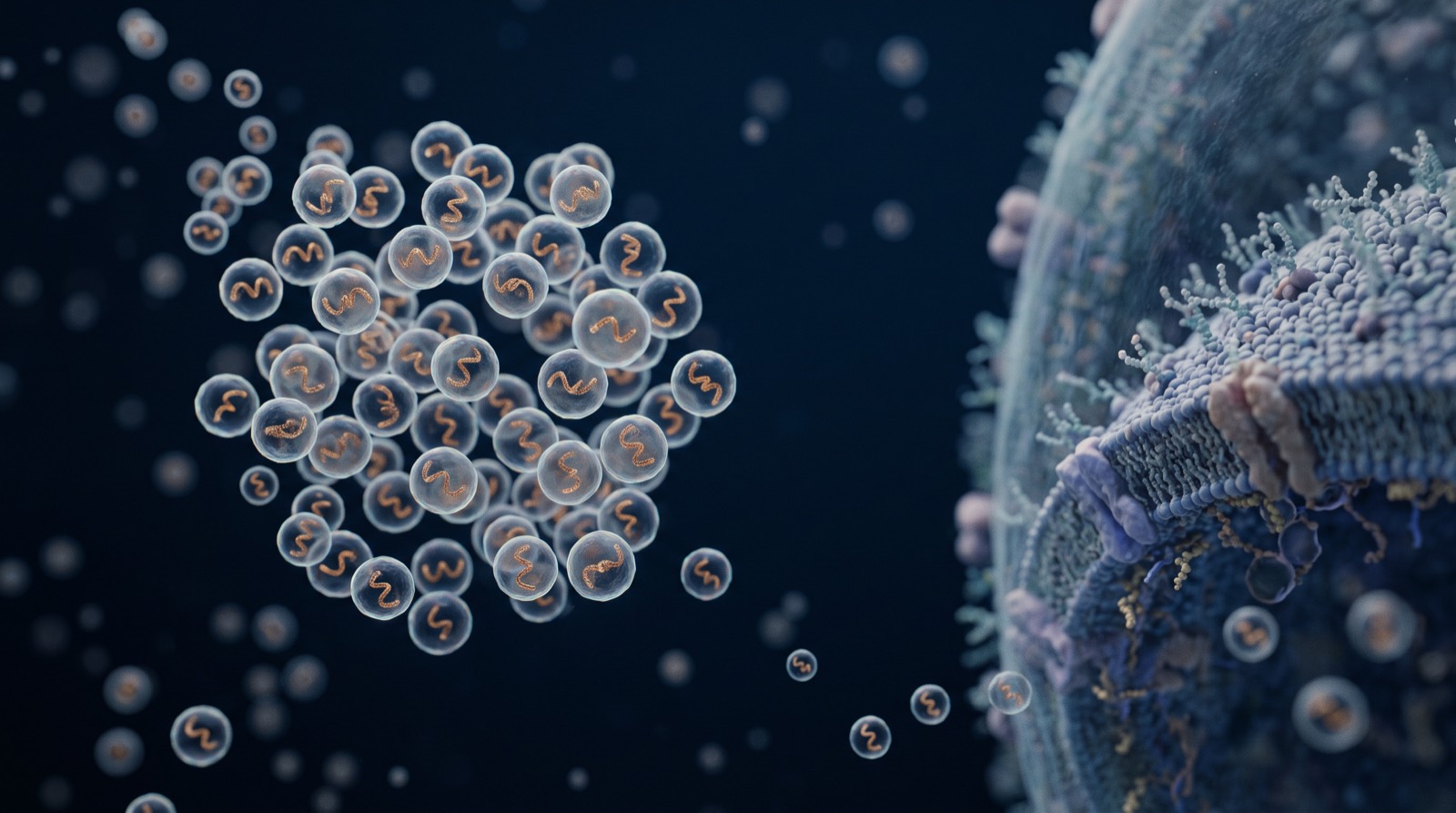
Tiny fat bubbles that carry genetic cargo into cells — the delivery technology that made in vivo CRISPR possible.

الإجابة المختصرة

A lipid nanoparticle is a microscopic bubble of fat with the genetic cargo tucked inside. Injected into the blood, it naturally ends up in the liver, where cells absorb it and release the contents. It is the same delivery technology used in mRNA COVID-19 vaccines, and it is what made editing a gene inside a living person practical.

Lipid nanoparticles comprise an ionisable lipid, a helper phospholipid, cholesterol and a PEG-lipid. After intravenous administration they acquire an ApoE corona and are taken up by hepatocytes via the LDL receptor, then escape the endosome as the ionisable lipid protonates. Cargo — typically Cas9 mRNA plus guide RNA — is expressed transiently, which limits editor exposure and off-target opportunity. Redosing is possible, unlike with AAV.

Getting the editor into a cell — the hard part AAV virus a hollowed-out virus · small cargo limit · long-lasting · immunity can block re-dosing Lipid nanoparticle a fat bubble · no size limit in practice · clears in days · naturally goes to the liver Electroporation an electric pulse · lab use, cells outside body · very efficient · only works ex vivo
Delivery, not the editing chemistry, is what decides which organs are reachable today. This is why liver diseases moved first.

Advantages that matter clinically

Where the analogy breaks downThe great limitation is tropism. Left to themselves, lipid nanoparticles go to the liver. Redirecting them to other tissues is one of the most actively pursued problems in the field, and solving it would unlock more diseases than any advance in editing chemistry.

Sources

Connected in the Atlas

Every entry on this site is linked to the others it relates to. These connections are part of the record, not a search result.

Technologies

Base Editing