Der umfassende Leitfaden zum Genome Editing.
Menü
Startseite Lernen Neuigkeiten Den Atlas fragen
Entdecken Technologien Krankheiten Behandlungen Klinische Studien Unternehmen Wissenschaftlerinnen und Wissenschaftler Gene Forschung Institutionen
Jenseits der Medizin Landwirtschaft Ethik Investieren Weltkarte
Lernen & Tools Hier starten Glossar A–Z Technologien vergleichen Zeitstrahl Listen & Rankings KI-Agenten ★ Gespeichert API
Über uns Über uns Methodik Datenquellen Redaktionelle Richtlinien Kontakt Haftungsausschlüsse

🧭 Geführte Ansicht
Neu in der Genetik? Wir erklären jeden Begriff beim Stöbern in einfacher Sprache. Dieselben Seiten, mit integrierter Hilfe.

⚡ Expertenansicht
Du kennst die Biologie bereits. Nur der Inhalt – klar und kompakt, ohne zusätzliche Erklärungen. Das ist die Standardansicht.

Sprache der Benutzeroberfläche
Heller Modus

Intermediate · 4 Min. Lesezeit

Lipid nanoparticles

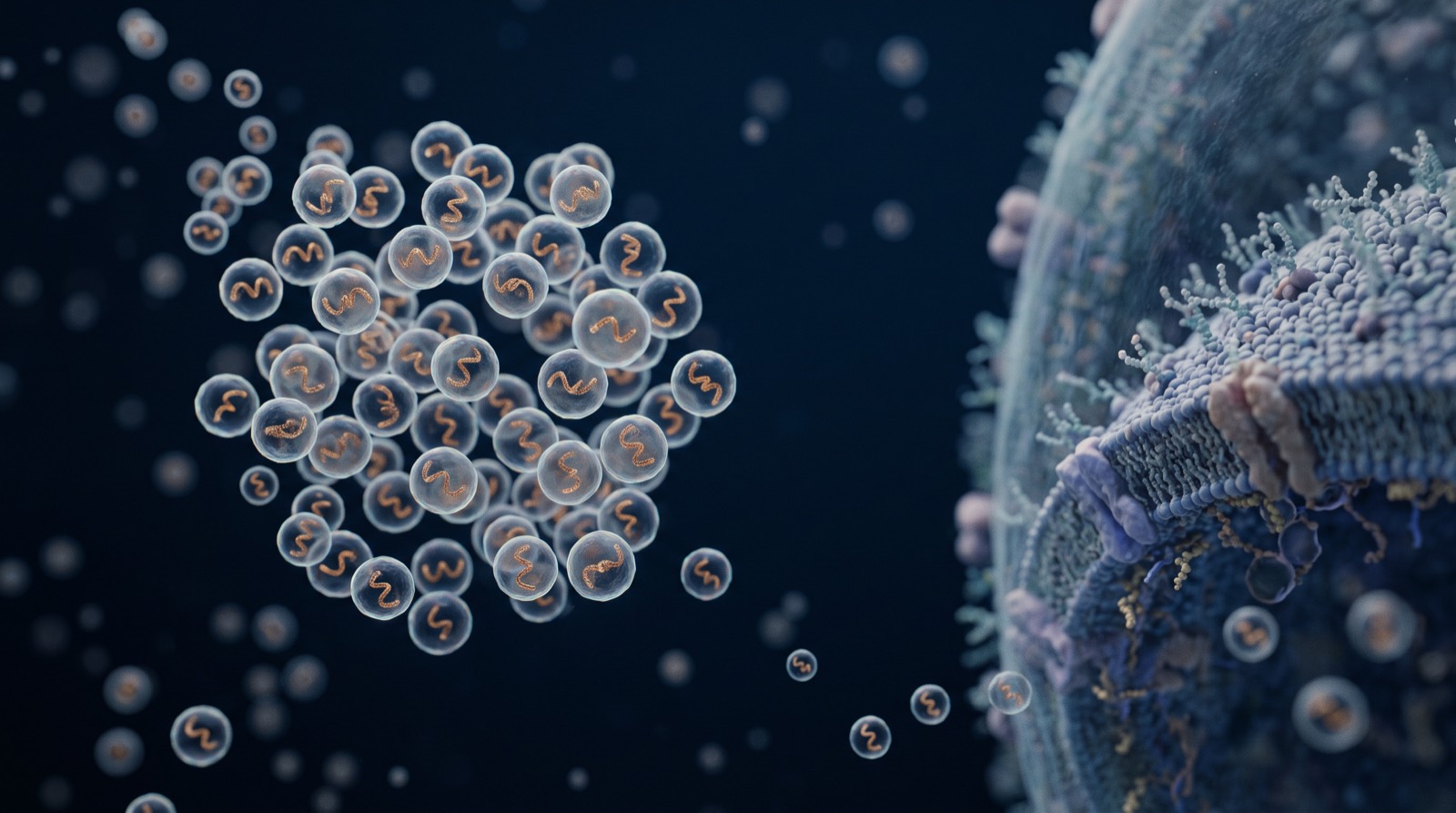
Tiny fat bubbles that carry genetic cargo into cells — the delivery technology that made in vivo CRISPR possible.

Die Kurzantwort

A lipid nanoparticle is a microscopic bubble of fat with the genetic cargo tucked inside. Injected into the blood, it naturally ends up in the liver, where cells absorb it and release the contents. It is the same delivery technology used in mRNA COVID-19 vaccines, and it is what made editing a gene inside a living person practical.

Lipid nanoparticles comprise an ionisable lipid, a helper phospholipid, cholesterol and a PEG-lipid. After intravenous administration they acquire an ApoE corona and are taken up by hepatocytes via the LDL receptor, then escape the endosome as the ionisable lipid protonates. Cargo — typically Cas9 mRNA plus guide RNA — is expressed transiently, which limits editor exposure and off-target opportunity. Redosing is possible, unlike with AAV.

Getting the editor into a cell — the hard part AAV virus a hollowed-out virus · small cargo limit · long-lasting · immunity can block re-dosing Lipid nanoparticle a fat bubble · no size limit in practice · clears in days · naturally goes to the liver Electroporation an electric pulse · lab use, cells outside body · very efficient · only works ex vivo
Delivery, not the editing chemistry, is what decides which organs are reachable today. This is why liver diseases moved first.

Advantages that matter clinically

Where the analogy breaks downThe great limitation is tropism. Left to themselves, lipid nanoparticles go to the liver. Redirecting them to other tissues is one of the most actively pursued problems in the field, and solving it would unlock more diseases than any advance in editing chemistry.

Sources

Connected in the Atlas

Every entry on this site is linked to the others it relates to. These connections are part of the record, not a search result.

Technologies

Base Editing