O guia definitivo sobre edição genética.
Menu
Início Aprender Notícias Perguntar ao Atlas
Explorar Tecnologias Doenças Tratamentos Ensaios Clínicos Empresas Cientistas Genes Investigação Instituições
Para além da medicina Agricultura Ética Investimento Mapa mundial
Aprender e ferramentas Comece aqui Glossário A–Z Comparar tecnologias Cronologia Listas e rankings Agentes de IA ★ Guardado API
Sobre Sobre nós Metodologia Fontes de dados Política editorial Contato Avisos legais

🧭 Vista Guiada
É novo em genética? Explicamos cada termo à medida que navega, em linguagem simples. As mesmas páginas, com a ajuda integrada.

⚡ Opinião de Especialista
Você já conhece a biologia. Apenas o conteúdo — limpo e compacto, sem explicações extras. Esta é a visualização padrão.

Idioma da interface
Modo claro

Intermediate · 4 min de leitura

Lipid nanoparticles

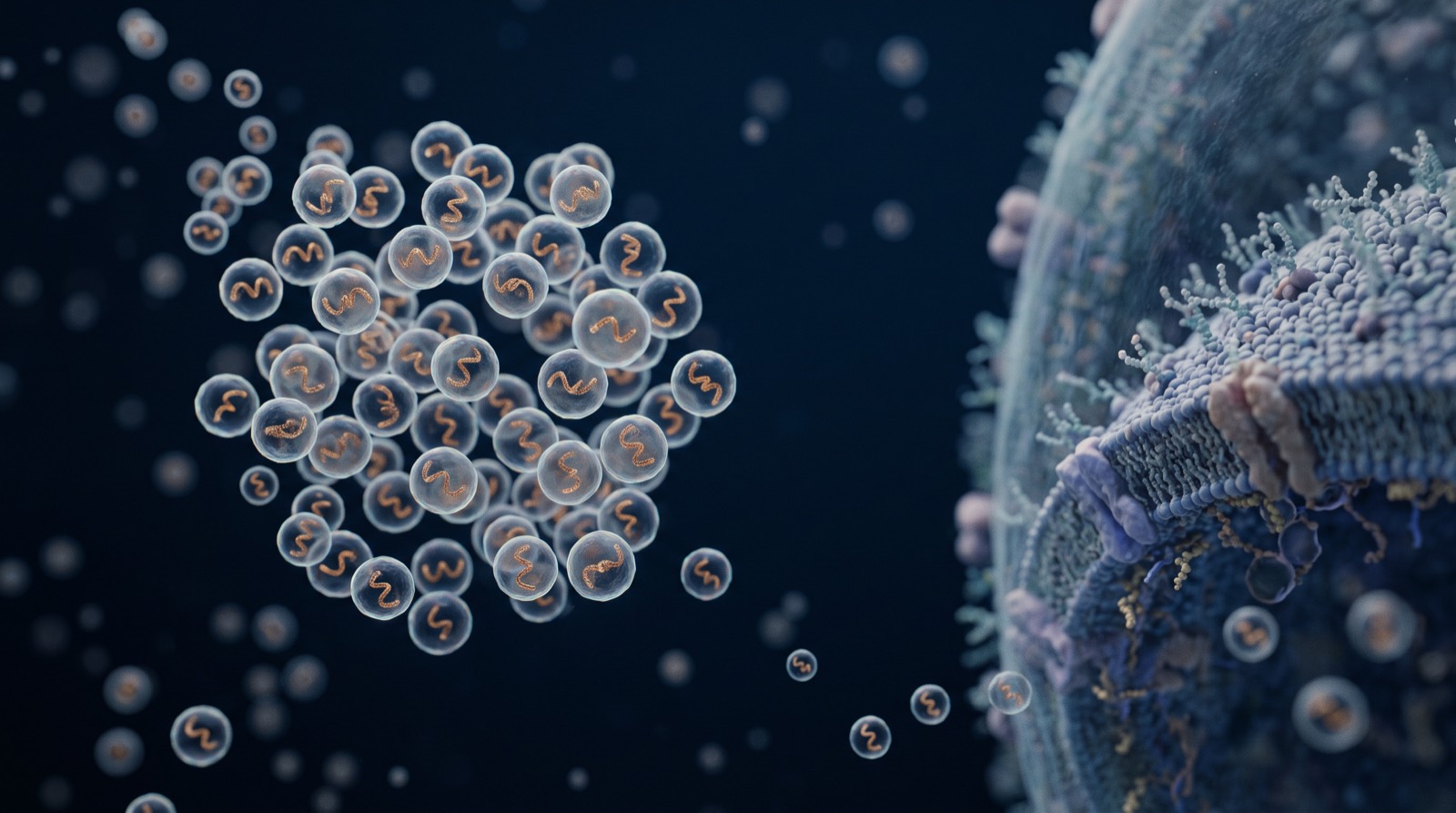
Tiny fat bubbles that carry genetic cargo into cells — the delivery technology that made in vivo CRISPR possible.

A resposta resumida

A lipid nanoparticle is a microscopic bubble of fat with the genetic cargo tucked inside. Injected into the blood, it naturally ends up in the liver, where cells absorb it and release the contents. It is the same delivery technology used in mRNA COVID-19 vaccines, and it is what made editing a gene inside a living person practical.

Lipid nanoparticles comprise an ionisable lipid, a helper phospholipid, cholesterol and a PEG-lipid. After intravenous administration they acquire an ApoE corona and are taken up by hepatocytes via the LDL receptor, then escape the endosome as the ionisable lipid protonates. Cargo — typically Cas9 mRNA plus guide RNA — is expressed transiently, which limits editor exposure and off-target opportunity. Redosing is possible, unlike with AAV.

Getting the editor into a cell — the hard part AAV virus a hollowed-out virus · small cargo limit · long-lasting · immunity can block re-dosing Lipid nanoparticle a fat bubble · no size limit in practice · clears in days · naturally goes to the liver Electroporation an electric pulse · lab use, cells outside body · very efficient · only works ex vivo
Delivery, not the editing chemistry, is what decides which organs are reachable today. This is why liver diseases moved first.

Advantages that matter clinically

Where the analogy breaks downThe great limitation is tropism. Left to themselves, lipid nanoparticles go to the liver. Redirecting them to other tissues is one of the most actively pursued problems in the field, and solving it would unlock more diseases than any advance in editing chemistry.

Sources

Connected in the Atlas

Every entry on this site is linked to the others it relates to. These connections are part of the record, not a search result.

Technologies

Base Editing