La risposta breve
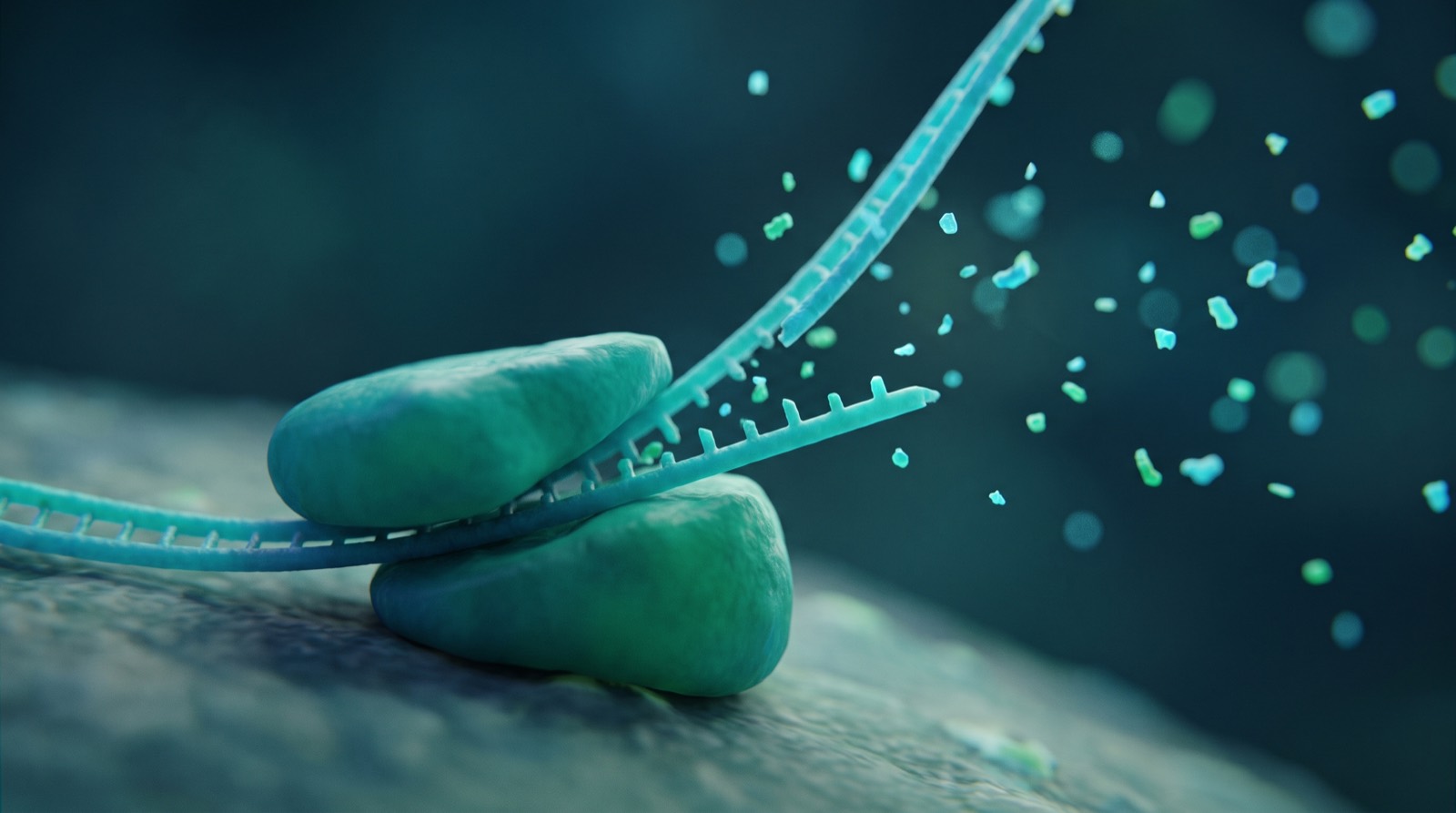
Cas stands for 'CRISPR-associated'. These are the proteins that do the physical work — holding the guide RNA, checking the DNA, and cutting. Cas9 is the famous one, but there are many, and they differ in what they target, how they cut, how big they are, and what signal they need next to the target.
Cas proteins are functionally diverse effectors. Class 2 systems use a single multidomain effector: Cas9 (type II) produces blunt double-strand breaks via HNH and RuvC domains; Cas12 (type V) uses a single RuvC-like domain and produces staggered cuts; Cas13 (type VI) targets RNA through HEPN domains. Catalytically dead variants retain targeting without cleavage and are the foundation of base editors, prime editors, CRISPRi, CRISPRa and epigenetic editors.
Why disabling the cutting was so productive
Take away a Cas protein's ability to cut and you are left with something arguably more useful: a programmable way to put any molecule you like at any address in the genome. Attach a chemical enzyme and you have a base editor. Attach a reverse transcriptase and you have a prime editor. Attach a repressor and you have CRISPRi. Nearly every advance since 2016 comes from that one move.
Sources
- National Human Genome Research Institute
Talking Glossary of Genomic Terms ↗