🧭 Режим с подсказками Впервые в генетике? Мы объясняем каждый термин прямо в процессе просмотра, простым языком. Те же страницы — со встроенной подсказкой.
⚡ Взгляд эксперта Биология вам уже знакома. Только содержание — чисто и компактно, без лишних пояснений. Это вид по умолчанию.
Язык интерфейса
Светлый режим
Technology · Gene regulation
CRISPRa (gene activation)
Uses a disabled CRISPR protein to switch a gene up rather than to cut it.
Research toolno cuttingresearchregulation
Laboratory researchDemonstrated in the laboratory. There is no treatment in or near the clinic for this use.
Простое объяснение
Take the CRISPR protein, break its cutting ability, and bolt on a molecular megaphone. It still finds the exact spot you aim it at, but instead of cutting it shouts — telling the cell to make far more of that gene's protein than it otherwise would.
Углубиться в тему
CRISPR activation uses catalytically dead Cas9 (dCas9) fused to transcriptional activator domains — VP64, p65, HSF1, or the SunTag and SAM amplification architectures — targeted to a promoter region to increase transcription of the endogenous gene. Because the endogenous locus is used, normal regulation and splicing are preserved, unlike delivering a cDNA copy.
This is the clearest counter-example to "gene editing always means changing DNA" — these tools deliberately leave the sequence alone.
What it is used for
Overwhelmingly a research tool: genome-wide activation screens that ask which genes, when turned up, produce a phenotype of interest. Therapeutically it is attractive for haploinsufficiency — conditions where one working copy of a gene is not enough — because turning up the remaining copy is conceptually simpler than replacing the broken one.
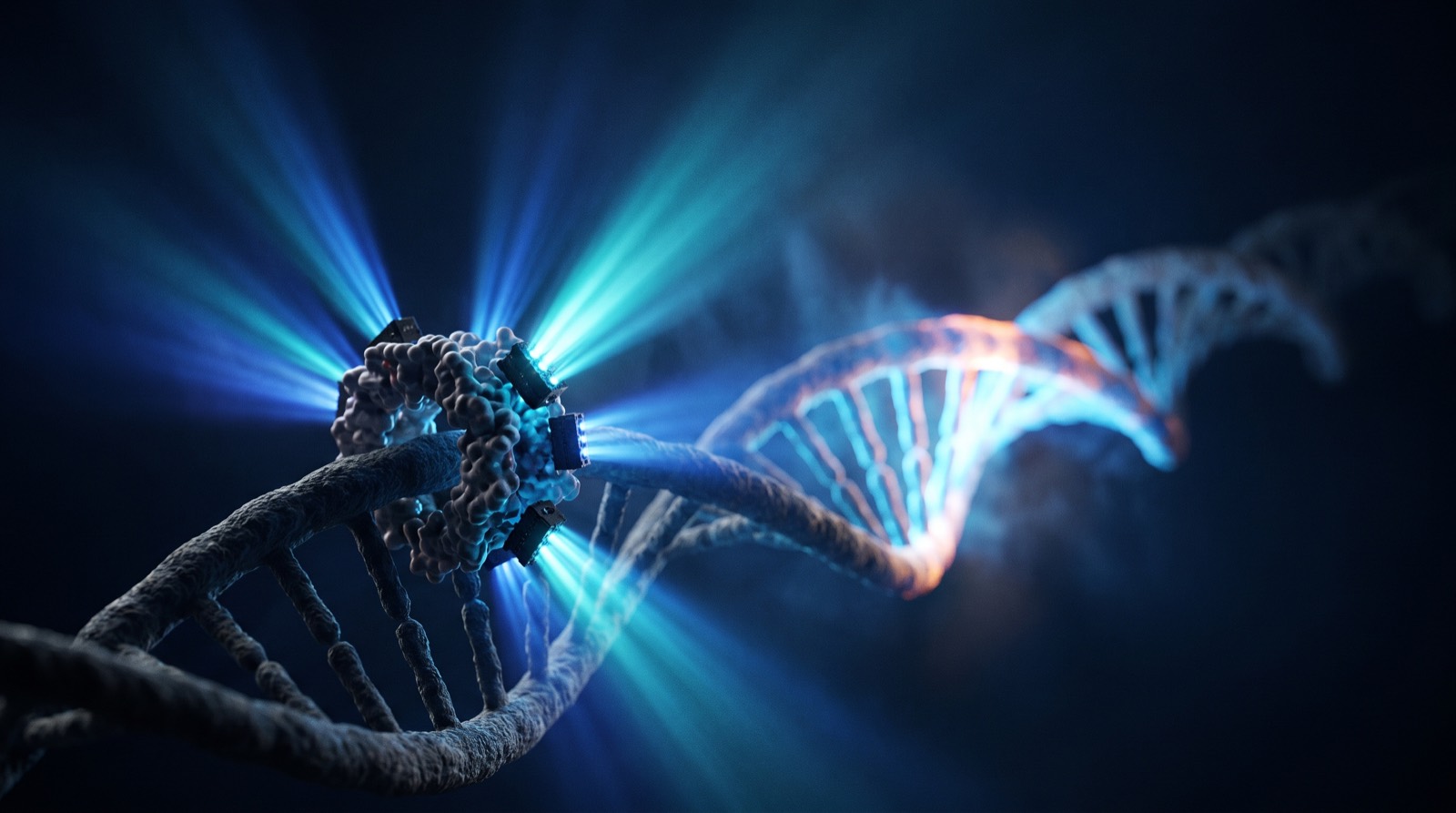
A disabled CRISPR clamp with activator modules driving expression upward. Illustration generated for The CRISPR Atlas — a visual aid, not a photograph or a literal depiction of molecular structure.
Только в образовательных целях
Эта страница — справочный материал, а не медицинская консультация. Статусы исследований и регуляторных процессов меняются; проверяйте дату последнего обновления выше и уточняйте всё важное по первичным источникам, указанным на странице.