🧭 Tampilan Terpandu Baru mengenal genetika? Kami menjelaskan setiap istilah saat kamu menjelajah, dalam bahasa yang mudah dipahami. Halaman yang sama, dengan bantuan yang sudah tersedia.
⚡ Pandangan Ahli Kamu sudah mengenal biologinya. Cukup kontennya — ringkas dan padat, tanpa penjelasan tambahan. Ini adalah tampilan default.
Bahasa antarmuka
Mode terang
Technology · Gene regulation
CRISPRi (gene silencing)
Parks a disabled CRISPR protein on a gene to block it from being read, turning it down without changing it.
Research toolno cuttingresearchregulation
Laboratory researchDemonstrated in the laboratory. There is no treatment in or near the clinic for this use.
Penjelasan sederhana
The same disabled CRISPR protein, but instead of a megaphone it carries a muffler — or simply sits in the way. The machinery that reads the gene runs into it and stops. Nothing is cut and nothing is rewritten; the gene is just made quiet.
Pelajari lebih dalam
CRISPR interference uses dCas9, usually fused to a KRAB repressor domain, targeted to a promoter or early coding region. It sterically blocks transcription initiation or elongation and, via KRAB, recruits repressive chromatin machinery. Effects are typically reversible when dCas9 expression stops, distinguishing it from epigenetic editors designed for durable silencing.
This is the clearest counter-example to "gene editing always means changing DNA" — these tools deliberately leave the sequence alone.
Why it beats knocking the gene out, for research
A knockout is all or nothing and permanent. CRISPRi gives partial, tunable, reversible knockdown, which is closer to how most drugs behave and much more informative when you want to know what a gene does at reduced rather than zero function — particularly for essential genes, where a knockout simply kills the cell and tells you nothing.
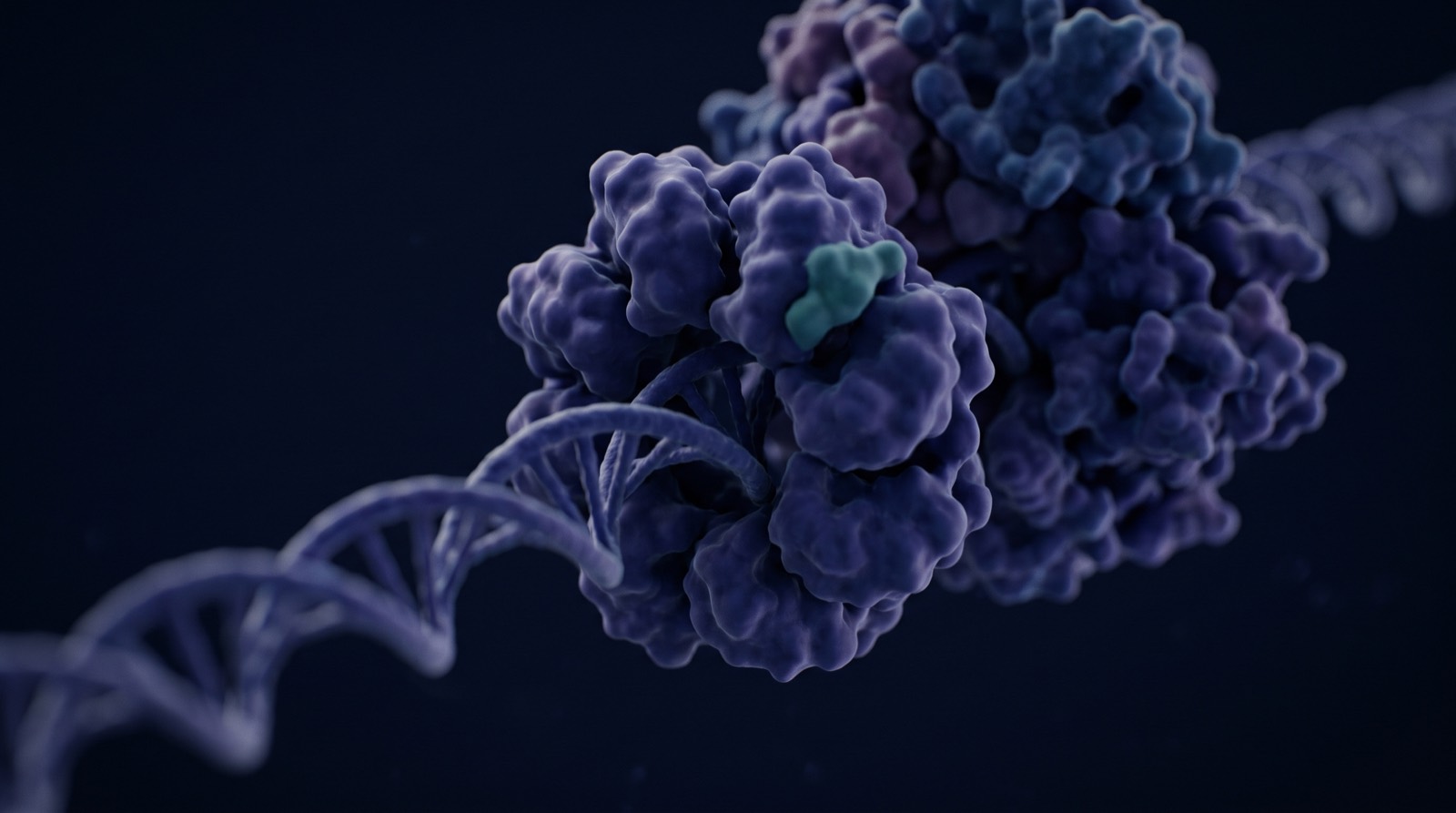
A disabled CRISPR clamp obstructing the machinery that reads a gene. Illustration generated for The CRISPR Atlas — a visual aid, not a photograph or a literal depiction of molecular structure.
Hanya informasi edukatif
Halaman ini adalah referensi, bukan nasihat medis. Status riset dan regulasi dapat berubah; periksa tanggal pembaruan terakhir di atas dan konfirmasi hal-hal penting dengan sumber primer yang tercantum.