🧭 Chế độ xem có hướng dẫn Mới làm quen với di truyền học? Chúng tôi giải thích mọi thuật ngữ ngay khi bạn duyệt, bằng ngôn ngữ dễ hiểu. Cùng nội dung đó, nhưng có phần hỗ trợ tích hợp sẵn.
⚡ Góc nhìn chuyên gia Bạn đã hiểu về sinh học rồi. Chỉ cần nội dung — gọn gàng và súc tích, không có giải thích thêm. Đây là chế độ xem mặc định.
Ngôn ngữ giao diện
Chế độ sáng
Technology · Gene regulation
CRISPRi (gene silencing)
Parks a disabled CRISPR protein on a gene to block it from being read, turning it down without changing it.
Research toolno cuttingresearchregulation
Laboratory researchDemonstrated in the laboratory. There is no treatment in or near the clinic for this use.
Giải thích đơn giản
The same disabled CRISPR protein, but instead of a megaphone it carries a muffler — or simply sits in the way. The machinery that reads the gene runs into it and stops. Nothing is cut and nothing is rewritten; the gene is just made quiet.
Tìm hiểu sâu hơn
CRISPR interference uses dCas9, usually fused to a KRAB repressor domain, targeted to a promoter or early coding region. It sterically blocks transcription initiation or elongation and, via KRAB, recruits repressive chromatin machinery. Effects are typically reversible when dCas9 expression stops, distinguishing it from epigenetic editors designed for durable silencing.
This is the clearest counter-example to "gene editing always means changing DNA" — these tools deliberately leave the sequence alone.
Why it beats knocking the gene out, for research
A knockout is all or nothing and permanent. CRISPRi gives partial, tunable, reversible knockdown, which is closer to how most drugs behave and much more informative when you want to know what a gene does at reduced rather than zero function — particularly for essential genes, where a knockout simply kills the cell and tells you nothing.
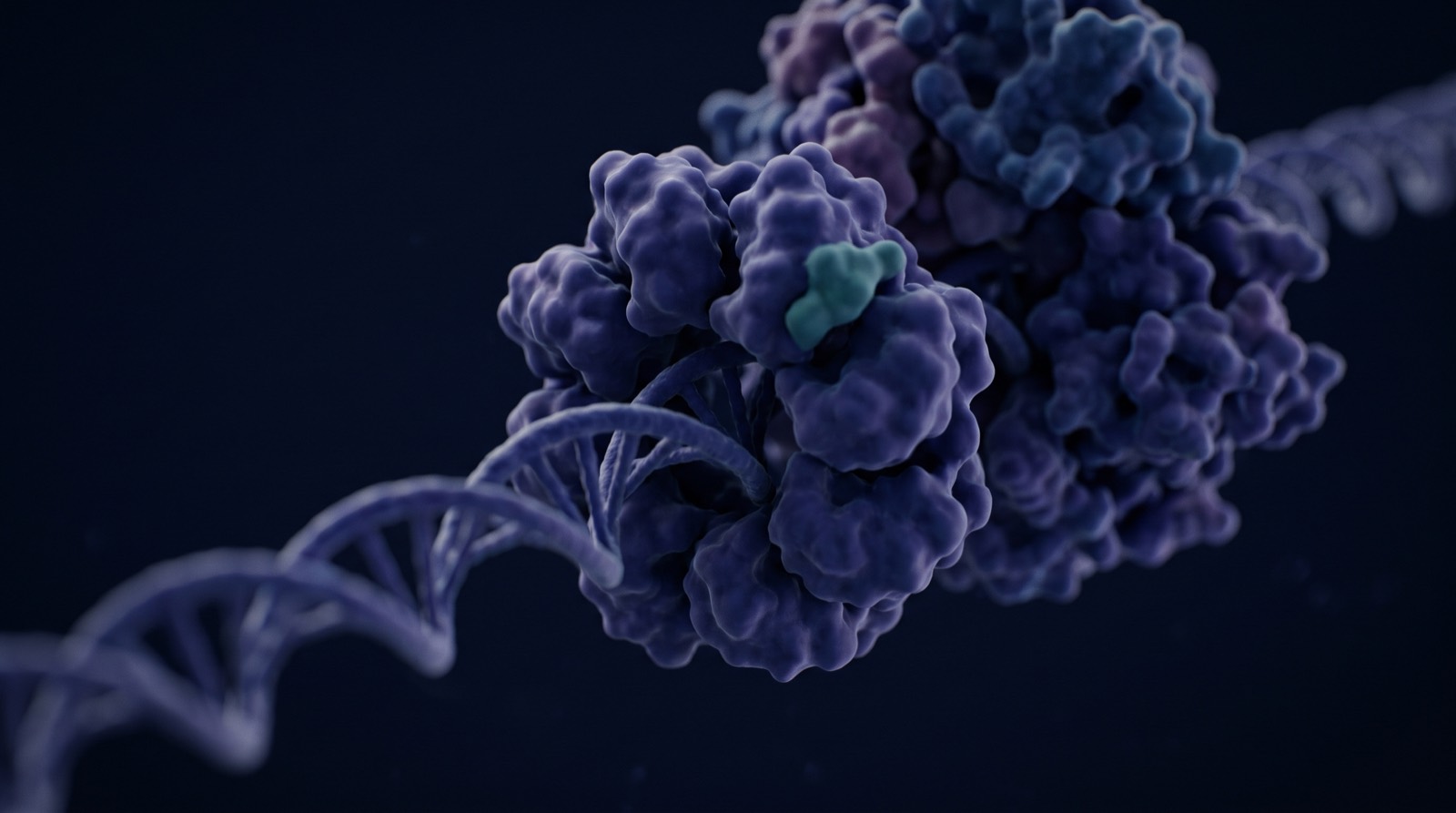
A disabled CRISPR clamp obstructing the machinery that reads a gene. Illustration generated for The CRISPR Atlas — a visual aid, not a photograph or a literal depiction of molecular structure.
Chỉ mang tính chất thông tin giáo dục
Trang này là tài liệu tham khảo, không phải tư vấn y tế. Tình trạng nghiên cứu và quy định thay đổi; hãy kiểm tra ngày cập nhật lần cuối ở trên và xác nhận mọi thông tin quan trọng với các nguồn chính được liệt kê.