Explicação simples
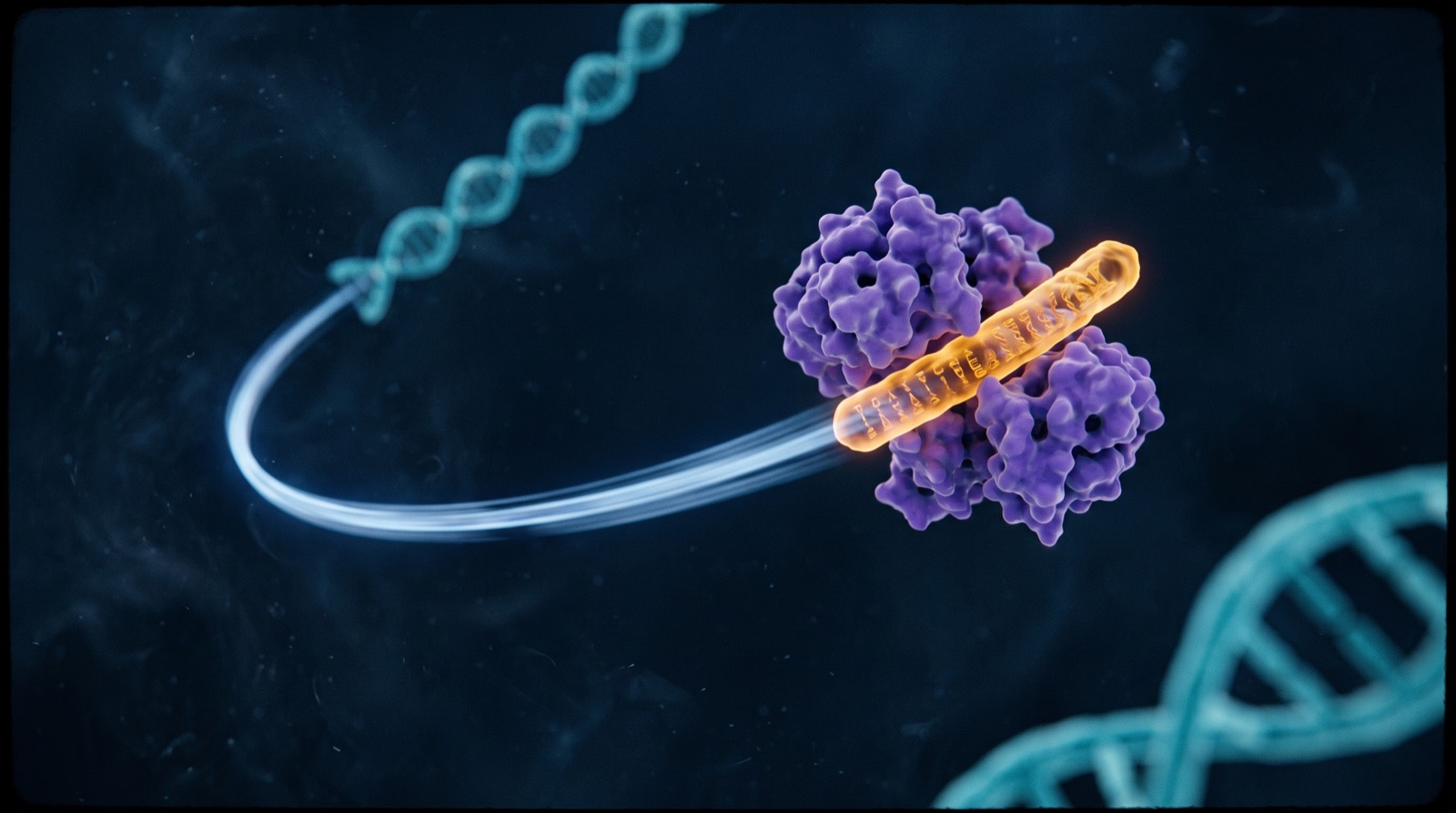
Transposons are stretches of DNA that move themselves around the genome; roughly half of human DNA descends from them. Their moving machinery has been domesticated: load a therapeutic gene into a transposon and the transposase will paste the whole cassette into a cell's DNA. The catch is aim — left to themselves, they land in many places, and where they land matters.
Aprofundar
DNA transposases such as Sleeping Beauty and piggyBac excise a cargo flanked by inverted terminal repeats and integrate it into the genome, carrying multi-kilobase payloads without viral vectors. Integration is semi-random with sequence preferences, raising insertional-mutagenesis concerns. CRISPR-associated transposases (CASTs), found in Vibrio and Scytonema species, couple transposition to RNA-guided targeting and are an active engineering effort aimed at giving transposases an address.
Where they are used
Non-viral CAR-T manufacturing is the most established clinical application: Sleeping Beauty and piggyBac provide a cheaper alternative to viral vectors for inserting a chimeric antigen receptor. Insertional mutagenesis remains the safety question the field takes most seriously, and long-term follow-up of transposon-engineered cell products is an active area of surveillance.
Sources
- Nature (Klompe et al.) · 2019
Transposon-encoded CRISPR-Cas systems direct RNA-guided DNA integration ↗