ゲノム編集の決定版ガイド。
メニュー
ホーム 学ぶ ニュース Atlasに聞く
探索する 技術 疾患 治療法 臨床試験 企業 科学者 遺伝子 研究 研究機関
医療を超えて 農業 倫理 投資 世界地図
学ぶ・ツール まずはここから 用語集 A~Z 技術を比較する タイムライン リスト・ランキング AIエージェント ★ 保存済み API
このサイトについて 私たちについて 方法論 データソース 編集方針 お問い合わせ 免責事項

🧭 ガイドビュー
遺伝学が初めてですか? 閲覧しながら、すべての用語をわかりやすく説明します。同じページに、サポートが組み込まれています。

⚡ 専門家の見解
生物学はすでにご存知の方へ。コンテンツだけをすっきりとコンパクトに、余分な説明なしでお届けします。これがデフォルト表示です。

表示言語
ライトモード

CRISPR basics · 6 分で読めます

How CRISPR works, step by step

A guide RNA finds the target, the Cas protein cuts, and the cell's repair machinery makes the actual change.

要約

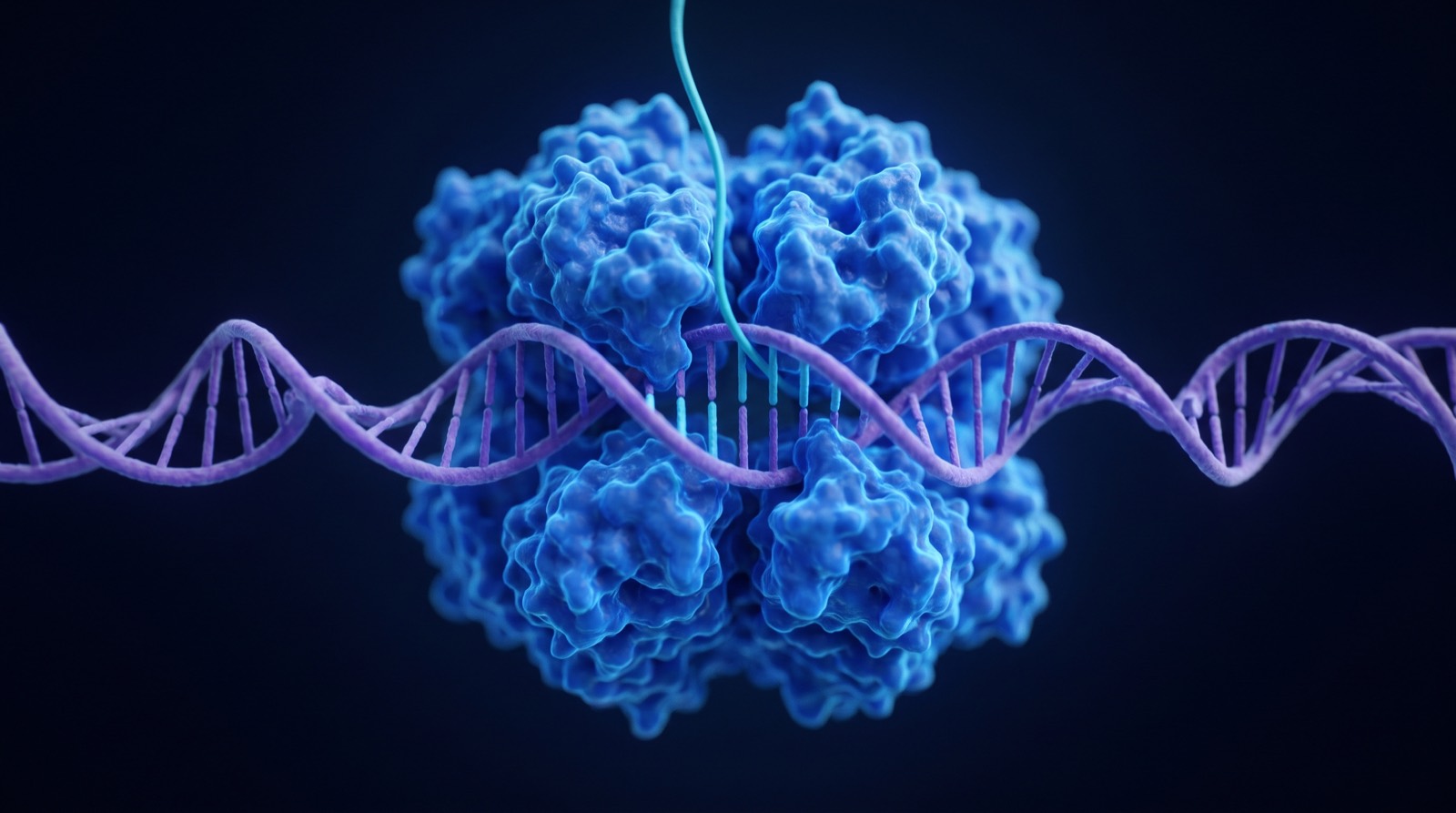
Three things have to happen. First, a short RNA guide finds the exact spot in the DNA. Second, a protein called Cas cuts there. Third — and this is the part most explanations skip — the cell notices the break and repairs it. The repair is where the edit comes from, and the cell chooses how to do it, not you.

CRISPR editing proceeds through target recognition, PAM-dependent R-loop formation, strand cleavage by the HNH and RuvC domains, and endogenous repair. Non-homologous end joining predominates and produces small insertions or deletions; homology-directed repair, active only in S and G2 phase, can install a precise change from a supplied template but is inefficient. Microhomology-mediated end joining and single-strand annealing contribute further outcomes.

How CRISPR-Cas9 finds one spot in three billion letters Cas9 protein holds the guide and does the cutting target DNA guide RNA — 20 letters you choose matching 20 letters in the genome PAM a short tag (NGG) that must sit next door, or Cas9 will not cut cut lands here — about 3 letters from the PAM
The guide is the programmable part: change those 20 letters and Cas9 goes somewhere else. The PAM is not optional — it is why some positions in a gene simply cannot be targeted with this enzyme.
What happens after the cut — the cell decides, not the scientist a break in both strands Path 1 — glue the ends back (NHEJ) Fast, always available — but it usually loses or adds a few letters at the join. Result: the gene is scrambled and stops working. Useful when switching a gene OFF is the goal. Path 2 — copy a template (HDR) If a matching template is supplied, the cell can copy it and rebuild the sequence exactly. Result: a precise, intended correction. Much rarer, and barely works in resting cells.
This is the single most important limitation of cut-and-repair editing: knocking a gene out is reliable, correcting one letter is not. It is the reason base and prime editing were invented.

Why repair is the whole story

The cell has several ways of repairing a double-strand break, and it chooses between them based on its state and the phase of its cycle. End joining is fast, always available, and sloppy — it usually leaves a few letters added or missing, which typically breaks the gene. That is a fine outcome if breaking the gene is the goal.

If you want a precise correction you need homology-directed repair, which copies from a template you supply. It only works in dividing cells and is inefficient even then. Non-dividing cells — neurons, mature muscle fibres — cannot use it at all. That single fact explains a great deal about which diseases are tractable and which are not, and it is why base and prime editing were invented.

Sources

Connected in the Atlas

Every entry on this site is linked to the others it relates to. These connections are part of the record, not a search result.

Technologies

CRISPR-Cas9